Digital Engagement's Fat Tail Risk?
“There are decades where nothing happens; and there are weeks where decades happen.”
Indeed, Meta, along with other social networks and potentially any company that relies on engagement online, may be passing through a week that can have a much deeper implication over the next decade.
Meta specifically suffered two separate blows in Los Angeles and New Mexico lawsuits this week; the LA litigation focused on algorithmic addiction and youth mental health, whereas the New Mexico lawsuit centered on child sexual exploitation and predator facilitation. Meta was ordered to pay $375 million in civil penalties for New Mexico lawsuit and the LA jury awarded $6 million in total damages ($3 million compensatory, $3 million punitive). For the LA case, the liability was split: Meta was found 70% responsible ($4.2 million) and YouTube was found 30% responsible ($1.8 million). Notably, TikTok and Snap settled out of court before the LA trial began.
At first glance, for a company such as Meta that generated $201 Billion revenue in 2025, the penalties may seem inconsequential. However, WSJ reported that “more than 3,000 other similar lawsuits against Meta, YouTube, Snapchat and TikTok that are pending in California courts.” Of course, if these lawsuits have teeth in California, it will add further ammunition across the US (and eventually for the entire world) to go after companies such as Meta for their alleged harm caused to the children. Market’s reaction to this lawsuit yesterday essentially captured this fat tail risk.
Meta and YouTube both mentioned that they will appeal these decisions and it appears highly likely that these may end up in Supreme Court. Given that context, I think there was another monumental decision by the US Supreme Court during this very week which may prove to be potentially indicative of what happens in the lawsuit against Meta et al. Back in 2018, Sony and other major recording and publishing companies sued Internet Service Providers (ISPs) arguing that ISPs are legally responsible for providing internet services to known infringers who downloaded and distributed songs without permission. A jury in 2019 even awarded $1 Billion in damages. Federal appeals court then upheld the verdict, but ordered a new trial to reconsider the damages amount. After nearly six years of the Jury’s original $1 Billion awards back in 2019, Supreme Court this week overturned this decision. Perhaps more importantly, the Supreme Court’s decision was unanimous 9-0!
The two major takeaways from the ISP lawsuit that I would like to highlight here are: a) how long it took for the entire process to go from Jury award to Supreme court, and b) how the Supreme Court had a very different attitude than the Jury which increasingly seem to suffer from a pernicious form of social inflation. As you can understand, this is likely going to be a long, arduous process for these tech companies and they have a decent probability of prevailing, especially in the Supreme Court.
One of the reasons I think these lawsuits may eventually need to be severely narrowed in their scope is in its current form, these lawsuits will have much greater ripple effect across many companies than people may be currently appreciating. Let me highlight this particular paragraph from the LA lawsuit:
“It is a matter of common knowledge in the social media industry that the Snap Streak product feature is designed to be addictive. Meta bluntly acknowledged as much in its internal documents, stating: “Streaks are a very important way for teens to stay connected. They are usually with your closest friends and they are addictive.” Nonetheless, Snap continues to provide this feature to its adolescent users”
If Streaks are considered too “addictive”, wouldn’t this also affect companies such as Duolingo? Of course, you can extend this argument to almost any other app on your phone that send you push notifications to encourage you to engage with the app. It is possible that the courts will force these companies to adopt a very different product design choices for minors and allow plenty of freedom in product design for adult users. In this case, almost all apps will be devoid of any engagement optimizations for non-adult users. Ultimately, if the citizens want this to be implemented, it indeed needs to be forced from top-down as it is nearly impossible to pursue from a bottom-up perspective. Even if a company such as Meta decides to avoid any engagement tricks for minors but their competitors relentlessly pursue it, it is very difficult for Meta to watch its competitors building competing networks of young users that can hurt its competitiveness in the long term. This is precisely why despite Meta generating only 1% of its revenue from teens, it cannot willingly cede this market to its competitors. To the extent the courts force all the companies to make the apps boring for minors, it may end up narrowing the path of future competitors for incumbent social networks such as Meta.
Moreover, I think it is likely that the court may also order Apple and Alphabet to take more active role in age-gating certain experiences. In the LA case, Kaley, the lead plaintiff, opened an YouTube account at the age of 6 and an Instagram account at the age of 9 (even though one is not permitted to open these accounts until the age of 13) and went onto spend up to 16 hours per day on these apps as a teen. One can certainly argue these apps should do a better job in verifying the age of the users and force time limits, but the internal discussion on these topics from these very companies clearly indicate that it is easier said than done. Here’s a paragraph from the LA lawsuit (emphasis mine):
“Meta offered to its users a feature that purported to show how much time users had spent on Instagram. And Meta touted this feature “when speaking to consumers, the press, and stakeholders about our efforts to combat social media addiction.” But internally, Meta acknowledged that the data reported by this tool was fundamentally “incorrect”: “It’s not just that Apple / Google have better data. Ours is wrong. Far worse. We’re sharing bad metrics externally. We’ve been unable to right it despite several person-months of efforts”
Snap also echoed similar sentiment:
“Snap’s executives have admitted that Snapchat’s age verification “is effectively useless in stopping underage users from signing up to the Snapchat app.”
I, however, do sympathize with the concerns related to algorithmic content on all social networks these days. I will highlight this particular paragraph from the lawsuit (emphasis mine):
“In December 2022, the Center for Countering Digital Hate (“CCDH”) conducted a similar study, creating TikTok accounts with a registered age of 13 in the United States, United Kingdom, Canada, and Australia. For the first 30 minutes on the app, the accounts paused briefly on videos about body image and mental health and liked them. “Where researchers identified a recommended video matching one of the below categories, they viewed the video for 10 seconds and liked it. For all other videos, researchers would immediately scroll the For You feed to view the next video recommended by TikTok.” TikTok’s algorithm seized on this information and within minutes began recommending content about eating disorders and self-harm”
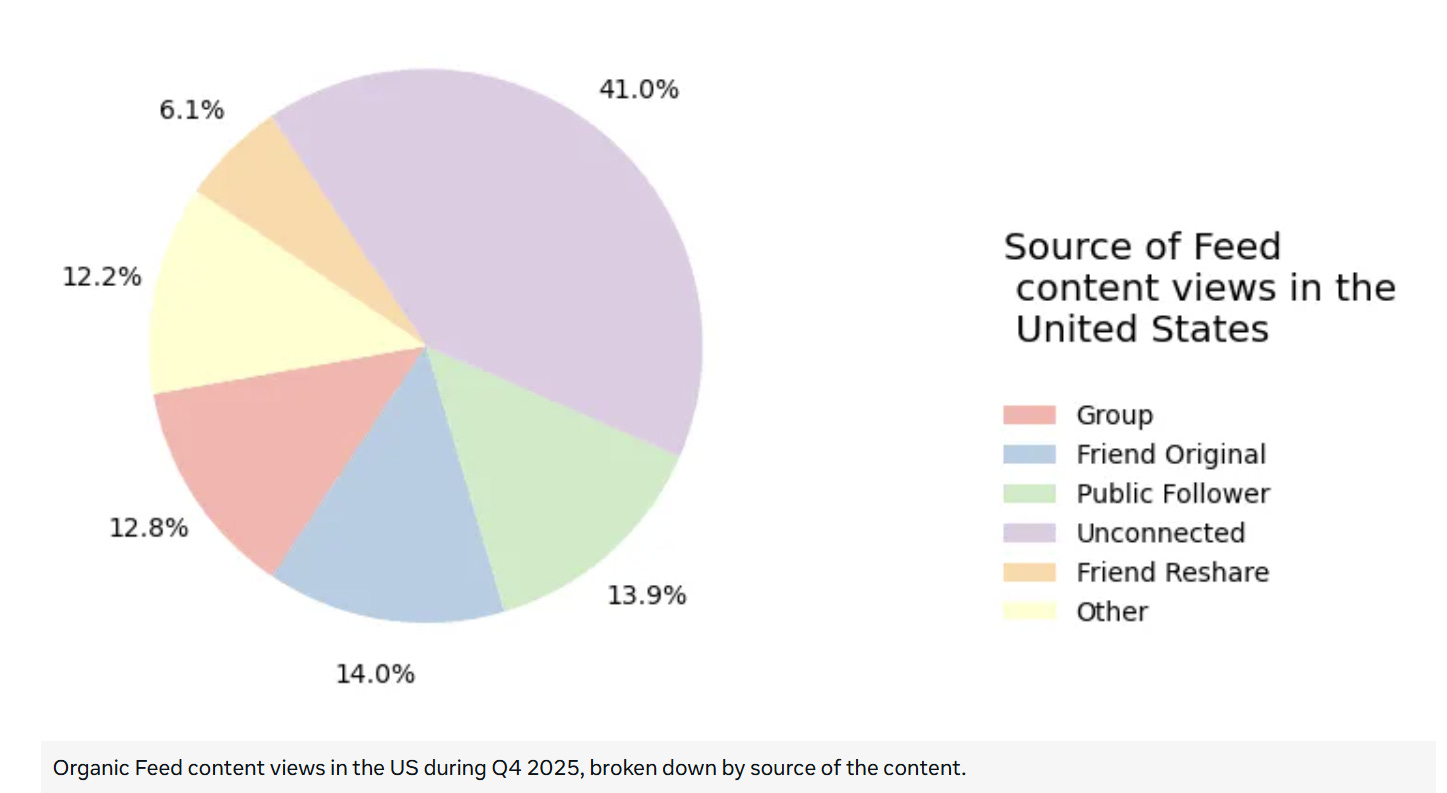
This isn’t, of course, TikTok specific concern. The New Mexico lawsuit demonstrated how one can be exposed to disturbing content through the algorithm on Meta’s properties. While these algorithm made all of our feeds much more relevant and engaging, it also unfortunately makes some of the worst individuals’ job lot easier to exploit minors. If the choice of liking or watching one “bad” content for a few seconds leads to a flood of similar content on the feed and sucks the user into that orbit, it is hard to see how or why the tech companies would have zero liability for such product design. As of 4Q’25, almost two-fifth content on Facebook content on the feed come from unconnected network. Meta may invoke section 230 defense or/and their first amendment right, but I’m not sure even the Supreme Court will be sympathetic towards tech companies’ right to control an algorithm that ends up showing questionable or disturbing content to minors.
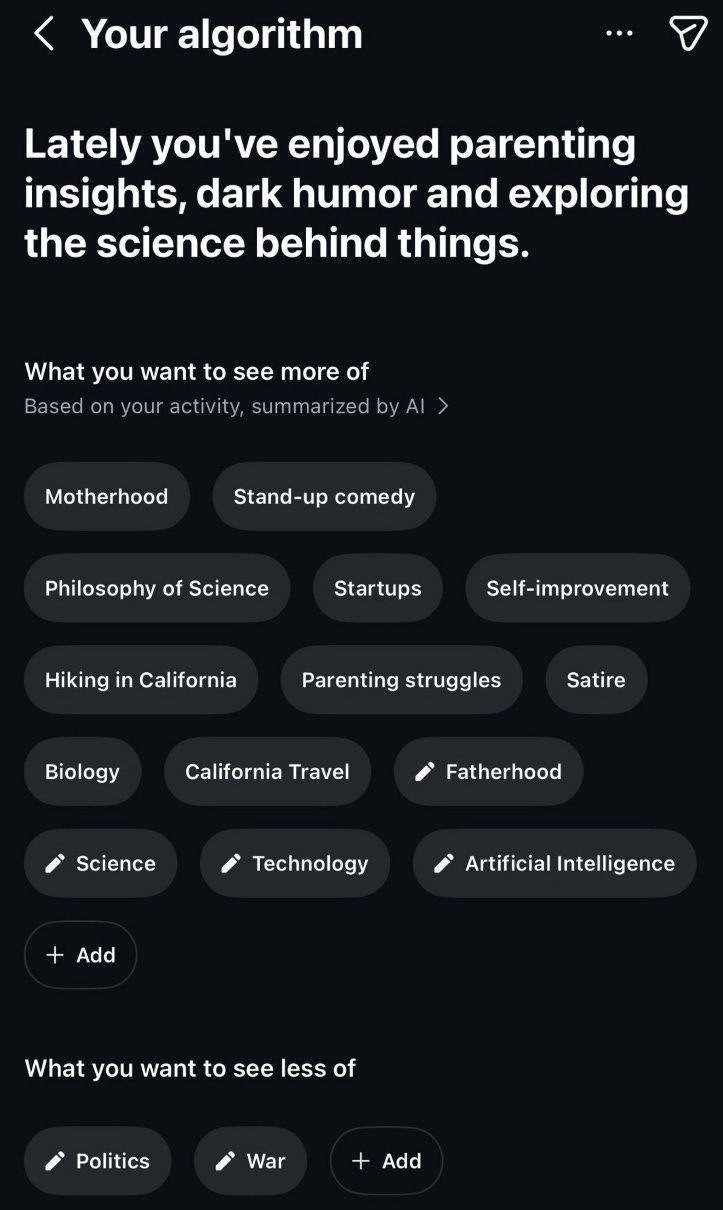
One challenge with these lawsuits is by the time we may get the final verdict from the Supreme Court, these apps may look very different. For example, Meta has already started to allow users to design your algorithm on Instagram (see image below) and perhaps soon Meta will require anyone less than 18 years old to have their parents design/choose an algorithm for their kids which cannot be edited by the kids.
Of course, in the future even if these apps address all the criticisms currently labeled at them, it won’t relieve them from the potential liabilities that may have been allegedly already incurred in the past. Nonetheless, given how expansive the scope of these lawsuits currently are and how far reaching the implications might be even beyond the social networking companies, it is highly likely that the scope will be narrowed down materially by the time Supreme Court delivers its decision. It’s hard to pinpoint or forecast the long-term liability here, but given confounding factors that contribute to our mental health and at best mixed evidence that social media itself played a primary role in such crisis, these companies will likely be able to mount a strong defense in keeping the liability low. As a result, while these lawsuits do threaten to be a potential fat tail risk for companies such as Meta, I will be surprised if that is indeed the case eventually.
In addition to “Daily Dose” (yes, DAILY) like this, MBI Deep Dives publishes one Deep Dive on a publicly listed company every month. You can find all the 67 Deep Dives here.
Current Portfolio:
Please note that these are NOT my recommendation to buy/sell these securities, but just disclosure from my end so that you can assess potential biases that I may have because of my own personal portfolio holdings. Always consider my write-up my personal investing journal and never forget my objectives, risk tolerance, and constraints may have no resemblance to yours.
My current portfolio is disclosed below: