Notes from a Dasher Shift, and the Drone Delivery Future
Programming Note: I will take a day off tomorrow, and will be back with daily posting schedule on Friday. DoorDash has a program called “WeDash” which requires its employees do delivery shifts every year.
Programming Note: I will take a day off tomorrow, and will be back with daily posting schedule on Friday.
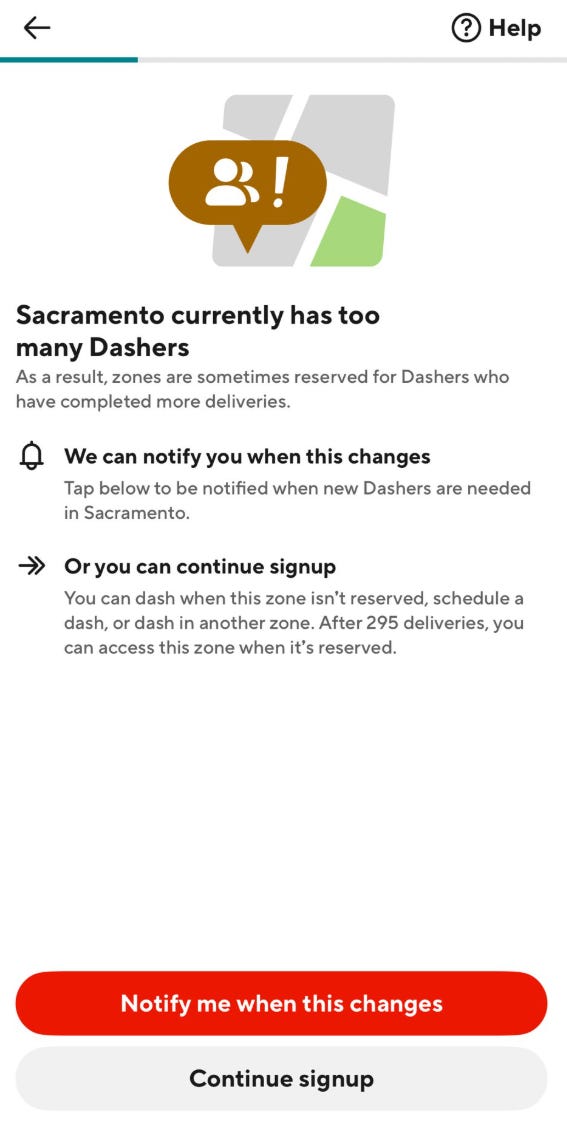
DoorDash has a program called “WeDash” which requires its employees do delivery shifts every year. While they have no such requirement for shareholders, I decided to sign up as a Dasher to understand the Dasher side of experience more intimately. My wife wasn’t particularly thrilled about the idea, but she begrudgingly understood my dedication to “research”! However, while trying to sign up, I got to know that my area already has “too many Dashers”. I still went ahead and finished the sign up process just to see whether I can potentially do deliveries in some other nearby regions.
Indeed, I could. Last week, I drove for 20 minutes to go to a nearby shopping mall, parked my car there, and logged into the Dasher app to become available to dash. Even though it was showing to be “peak” hour, I had to wait for almost 10 minutes before getting a notification to accept an order. The restaurant was just three minute walking distance from my parking area, so I accepted the order and walked to the restaurant. Once I was there, I waited for a couple of minutes for the restaurant to finish the order. After receiving the order, I had to go to the app and let DoorDash know that the order includes all the items the customer ordered. Then I went back to my car and drove for 27 minutes to drop the order at customer’s doorstep. I then had to drive another 30 minutes to return home.
I checked my app and I made just $13 for the delivery. Even though I was “active” on the Dasher app for ~40 minutes (~10-minute wait time and ~30-minute drive to drop the order), once you include the “deadhead miles”, I was making less than $9 per hour, even while ignoring gas and depreciation costs. However, a couple of days later, DoorDash let me know that I received $5.58 tip from the customer. It’s pretty remarkable that ~30% of my actual earnings from that order was funded directly by the customer. Without such generosity from the customer, the Dasher experience would be even less appealing. However, the whole experience also reminded me the kind of people who would find this job worthwhile. The dasher job is particularly appropriate for people who need flexibility in hours. If someone is available to work for longer hours, they should probably work more regular retail jobs (e.g. Walmart) to optimize for higher earnings (especially when you include gas and depreciation costs). But if you crave for flexibility, this can be pretty decent gig since the opportunity cost for flexible work hours is very different than regular job.
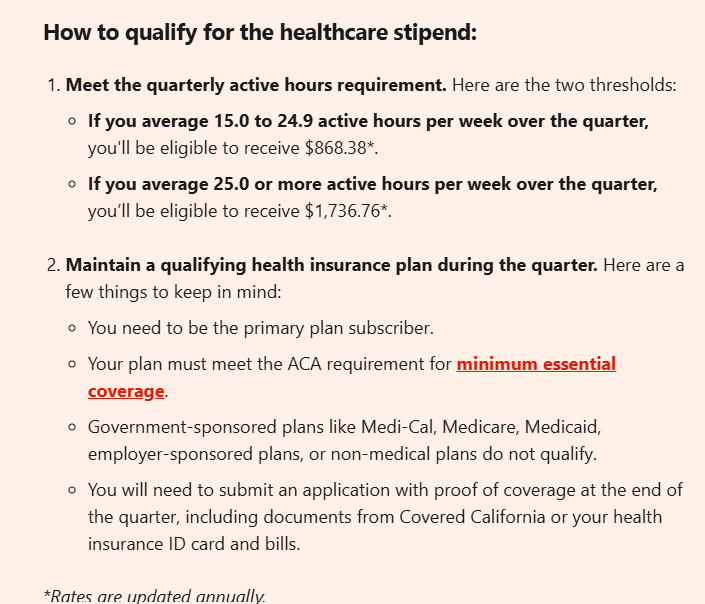
A couple of days ago, I actually received an email from DoorDash outlining how many hours I need to work to be eligible to receive healthcare stipend from DoorDash. If a dasher utilized this benefit, this could add another ~$3 to ~$5 cost per hour of dasher to DoorDash. Assuming my dasher earnings is somewhat representative of an average order in my area, DoorDash is essentially spending almost $20 per hour of dasher availability in my area. So even if I quibble around lower earnings of dashers, I’m not sure I can say DoorDash is being too stingy here.
Of course, the regulatory wind around the country (and the world) likely means the effective cost of a dasher hour for DoorDash may continue to rise. Since ~3% Americans worked as dashers for DoorDash last year, it’s also hard to imagine that there is an ample supply of inexpensive dashers available in the US if DoorDash wants to scale their GOV ~4-5x over the next decade. For anyone intending to be long-term shareholder of DoorDash, it seems increasingly important to understand their bet on autonomous delivery on which I will share more thoughts behind the paywall.
Subscribers get the daily journal and five+ years of Deep Dives, i.e. full-length analyses with financial models on 65+ companies. The daily is just how I think out loud between the Deep Dives!